#3D Printing

7 posts

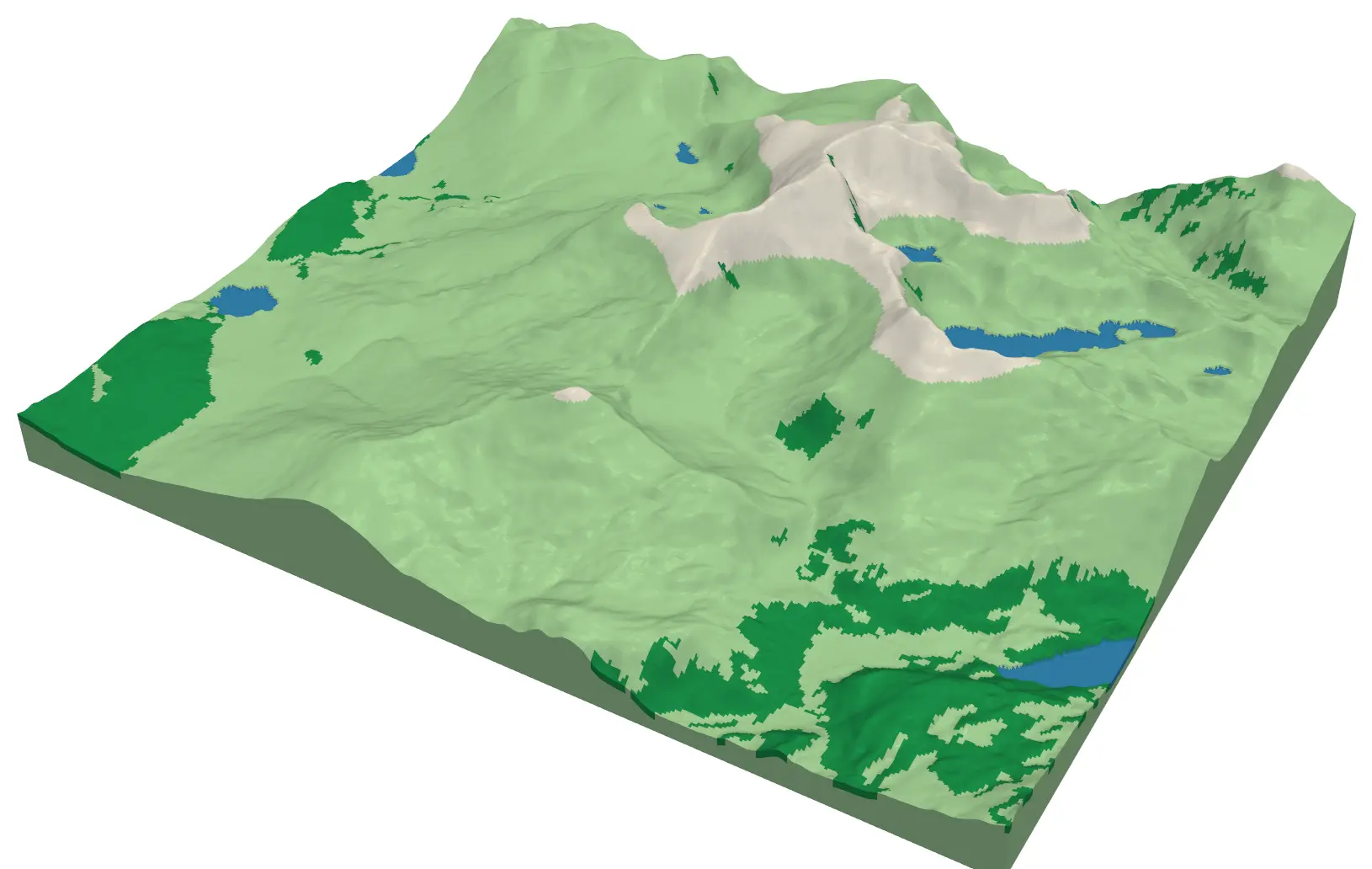
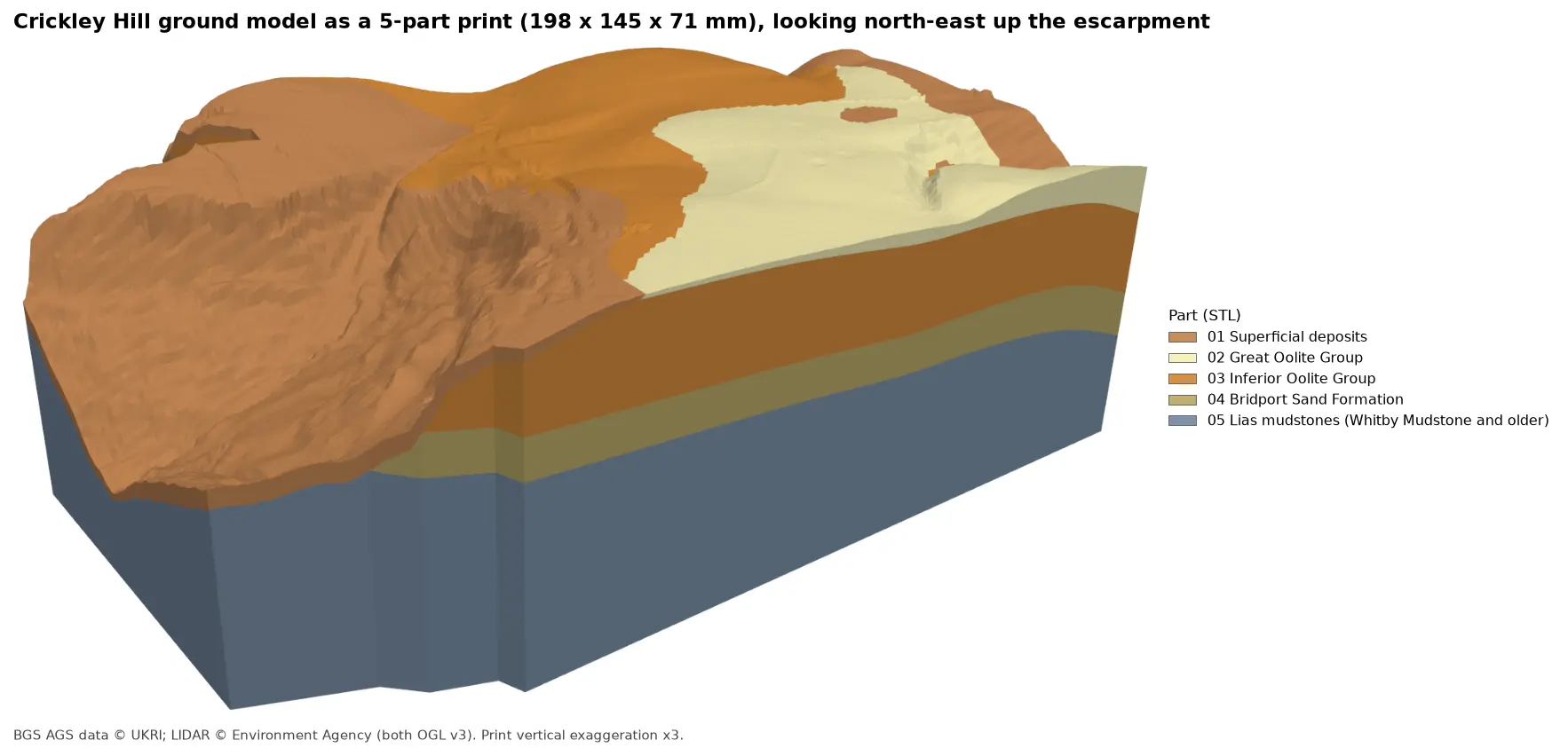
Rendered 3D print of the Crickley Hill ground model, 198 by 145 by 71 mm, looking north-east up the escarpment. Brown superficial deposits cover the western slope, orange Inferior Oolite forms the scarp and plateau, pale yellow Great Oolite caps the south-east, and the side walls show a band of olive Bridport Sand over blue-grey Lias mudstones.

Tutorial Python Part 7 of 7

3D-print a geological ground model: one watertight STL per stratum

Turn the kriged stratum surfaces from Part 5 into a multi-material 3D print of the Cotswold escarpment at Crickley Hill. Cut a window, decide what is too thin to print, build one solid per unit with mesh booleans, prove the parts fit exactly and are watertight, and write five STLs and a colour 3MF for AMS and MMU printers.
Advanced 11 min read

Tutorial Python Part 5 of 5

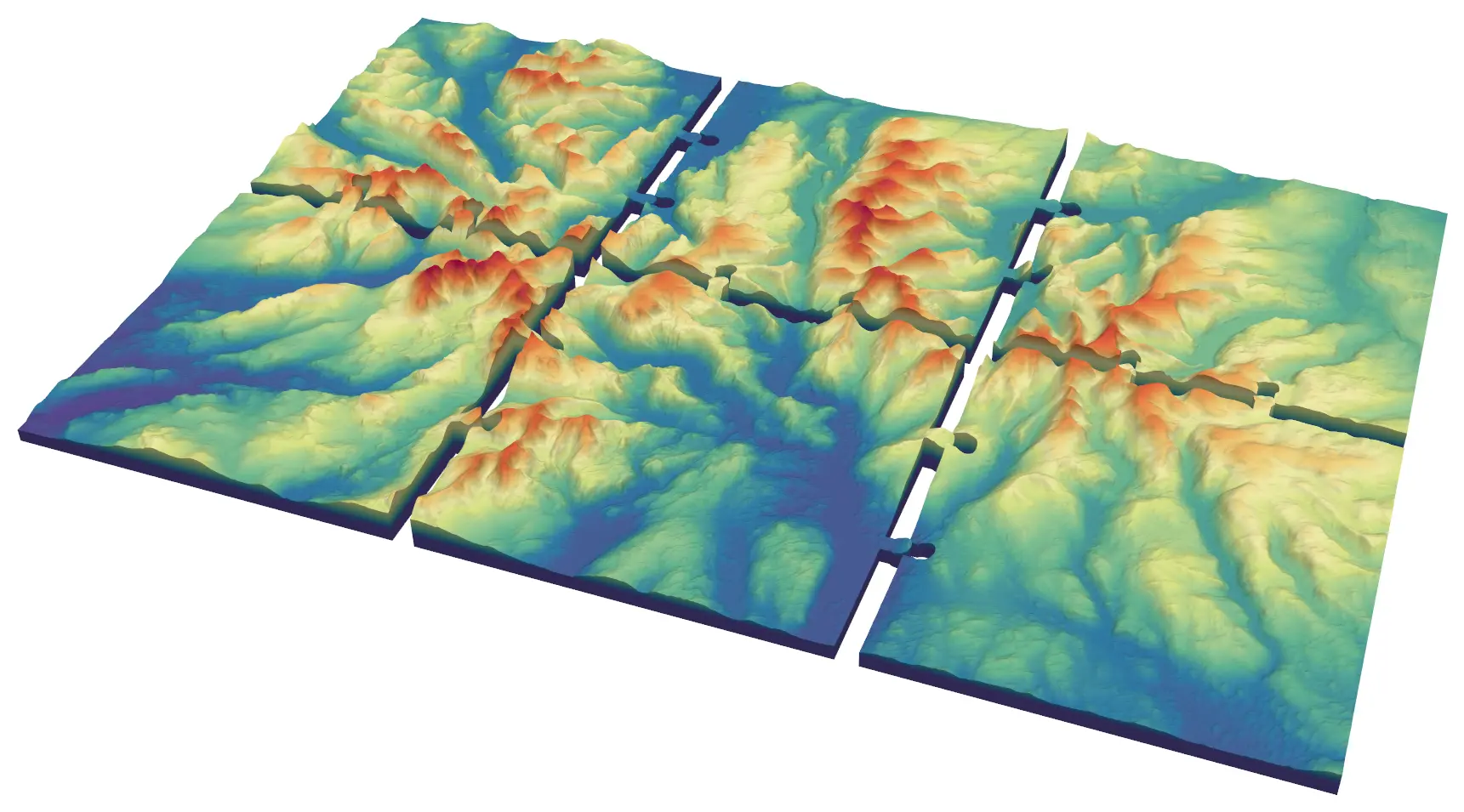
Tiling a large 3D-printed terrain model: jigsaw joints and dowel pins in Python

Split a 45 × 30 km model of the central Lake District into six interlocking 150 mm tiles from Copernicus GLO-30, with jigsaw knobs and a 0.2 mm printing clearance or straight edges and filament dowels, and prove every tile is watertight and fits its neighbours.

Advanced 9 min read

Tutorial Python Part 1 of 5

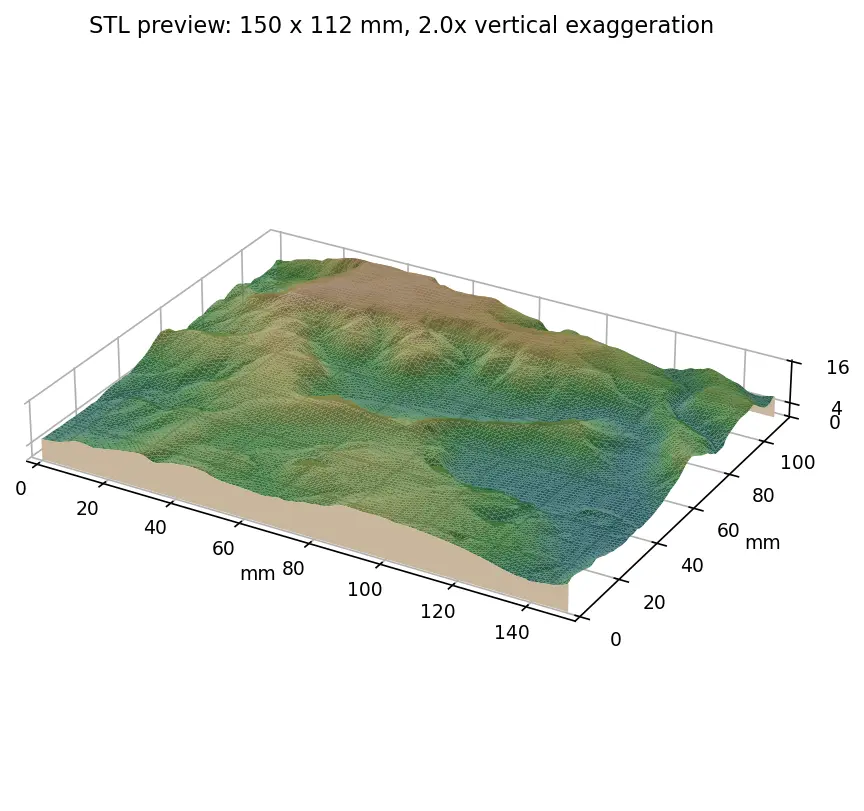
From DEM to 3D-printable STL with Python and NumPy

Stream a Copernicus 30 m DEM of the Edale valley, reproject it to British National Grid, scale it to a 150 mm print and write a watertight binary STL using only NumPy, with checks that prove the mesh is printable.

Intermediate 6 min read